Engineered vs Solid Hardwood: Which Is Actually Better?
Solid isn't automatically better — an honest, side-by-side look at engineered vs solid hardwood and where each one genuinely wins.
4 min read
Short answer: Both are real wood. Solid hardwood is one solid piece and can be refinished many times, but it moves significantly with humidity and cannot go over concrete or below grade. Engineered hardwood has a real hardwood top layer over a cross-layered plywood core, making it far more dimensionally stable and suitable for wide planks, concrete slabs and basements.
Engineered hardwood is real wood
The most common misconception in flooring. Engineered hardwood is not laminate and not vinyl — the surface you walk on is genuine sawn hardwood. What differs is what sits underneath.
Solid hardwood: one piece of wood, typically 3/4" thick, all the way through.
Engineered hardwood: a real hardwood wear layer — on a quality floor, 3–6 mm of sawn timber — bonded to a core of cross-layered plywood or HDF.
That cross-layered core is the entire point. Because each layer runs perpendicular to the one below, the layers restrain each other's movement. The plank expands and contracts far less than solid wood with changes in humidity.
Where each genuinely wins
Solid hardwood wins on
Refinishing life. A 3/4" solid floor can be sanded and refinished perhaps 5–7 times, which can mean a century of service.
Resale perception. Some buyers still assign a premium to the word "solid," fairly or not.
Engineered hardwood wins on
Dimensional stability. Substantially less seasonal gapping and cupping.
Concrete and below grade. Solid hardwood cannot be installed on a concrete slab or in a basement. Engineered can.
Wide planks. This one is decisive. A 10-inch solid plank moves so much across its width that it will cup and gap noticeably through the seasons. Wide-plank flooring is engineered for a structural reason, not a cost one.
Radiant heat. Only engineered is generally approved over underfloor heating.
Installation options. Float, glue or nail. Solid must be nailed to a wood subfloor.
The refinishing question, honestly
This is where most comparisons mislead people.
Yes, solid can be refinished more times. But ask how often floors are actually refinished. Most homes refinish once, maybe twice, in twenty-five years — and increasingly not at all, because a screen and recoat (abrading the existing finish and applying a fresh one) restores appearance without removing any wood.
A quality engineered floor with a 4 mm sawn wear layer can take one or two full refinishes plus multiple recoats. For most households, that comfortably exceeds what the floor will ever actually need.
The real distinction is wear layer thickness, not solid versus engineered. A cheap engineered floor with a 0.6 mm sliced veneer can never be refinished at all. That product is what gives engineered flooring its bad reputation — and it has almost nothing in common with a 4 mm sawn wear layer.
How to specify engineered properly
If you go engineered, the questions that matter:
Wear layer thickness. 3 mm minimum; 4 mm or more for a floor meant to last generations.
Sawn or sliced? Sawn wear layers are cut like solid lumber and show true grain. Sliced (rotary-peeled) veneer is thinner and can show a repeating pattern.
Core material. Multi-ply Baltic birch or similar quality plywood, not HDF, for the best stability.
Total thickness. 5/8" or 3/4" feels substantially more solid underfoot than 3/8".
Where Pavilion Manor fits
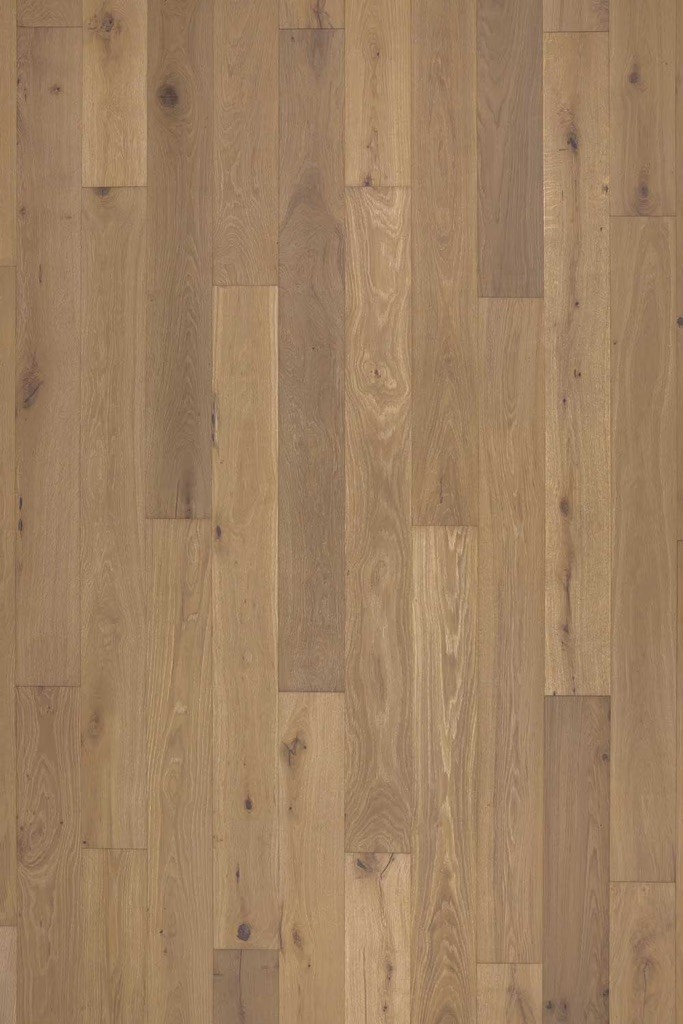
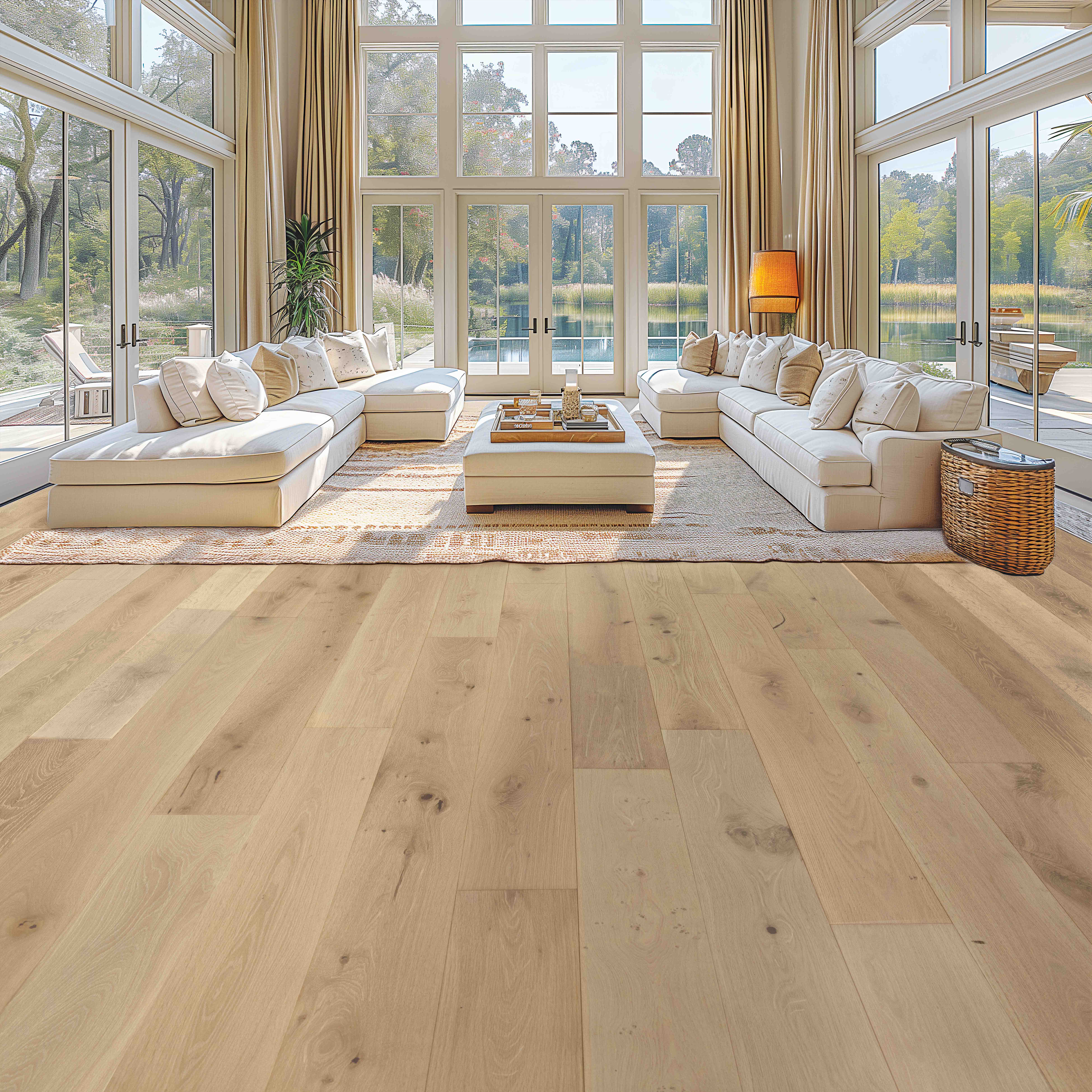
Pavilion Manor is engineered European White Oak built at the top of that specification — a genuine sawn wear layer over a stable multi-layer core, in wide 8.66-inch planks with V4 bevelled edges and natural character-grade variation. Engineered construction is what makes a plank that wide viable in California's humidity swings without seasonal cupping.
Explore Pavilion Manor · Order free samples
Frequently asked questions
Is engineered hardwood real wood?
Yes. The surface layer is genuine sawn hardwood. Only the core beneath it differs from solid, using cross-layered plywood for stability.
Does engineered hardwood add value to a home?
Yes. Quality engineered hardwood with a thick sawn wear layer is regarded as a hardwood floor by appraisers and buyers alike. Very thin veneered products are the exception.
Can engineered hardwood be refinished?
It depends entirely on the wear layer. A 3–6 mm sawn wear layer supports one or two full refinishes plus several screen-and-recoats. Anything under about 2 mm generally cannot be sanded.
Which is better for a basement?
Engineered, without qualification. Solid hardwood should never be installed below grade — the moisture from a concrete slab will cause it to cup and buckle.

Jeff Garber
Flooring Expert
Next posts